How to Choose Padel Balls for Your Court and the Weather
What changes between fast and control padel balls, how to pick one for cold, heat, your court and your level, and three FIP-approved cans with prices.
Translated from our Spanish edition. Read the original in Spanish

Contains affiliate links: if you buy through them we may earn a commission, at no extra cost to you. How we are funded.
The right padel ball for you depends on the cold, the heat, the court and your level. As a rule of thumb, a fast ball suits cold days and slow courts, and a control ball suits heat and fast courts.
Fast or control: what actually changes?
Every approved ball meets the same specifications set by the International Padel Federation (FIP). The difference lies within those limits: the rubber core, the felt and the pressure.
| Measurement | FIP rules |
|---|---|
| Diameter | 6.35 to 6.77 cm |
| Weight | 56.0 to 59.4 g |
| Bounce (new ball) | 135 to 145 cm, dropped from 2.54 m |
Head explains it with its two Pro balls. According to Head, the Pro S+, the fast one, has a natural rubber core that is “15% thicker” (Head does not say compared with what) and a compact felt. The Pro+, the control ball, uses a thinner synthetic core.
Which ball for which weather?
Wilson designed the two official balls of Premier Padel, the main professional tour, around these conditions. The control ball is meant for fast courts, heat, humidity and altitude. The fast ball is for slow courts and the cold.
| Conditions | Ball | Why |
|---|---|---|
| Cold, winter, slow court | Fast | Livens up a slow game |
| Heat, humidity, fast court | Control | Slows down a game that is already quick |
| Altitude (above 1,000 m) | A high-altitude ball | The FIP rules allow a different ball with less bounce |
In practice, if the ball bounces low and comes off the racket slowly in winter, switch to a faster one. In summer, do the opposite.
And for your level?
Head sorts its range like this, which works as a general guide:
- Beginners: a slow, durable ball that is easy to control (Head Team).
- Improving players: fast, but not too fast (Head One).
- Precision and control: Head Pro+.
- Speed: Head Pro S+.
If you’re just starting out, you don’t need the fastest ball. What you want is longer rallies.
Three cans to try
All three are on the FIP list of approved balls, with approval valid until at least 2027 (list checked on 26 October 2026). A can costs between €5.20 and €6.00 at PadelProShop (prices on 26/10/2026), excluding delivery. The code PUNTAZOS takes 10% off, even if you only buy one can. See how to apply the code (video).
| Ball | Type | Best for | Price |
|---|---|---|---|
| Head One | Fast, but not too fast | Most of the year | €5.20 |
| Wilson Padel Premier Speed | Fast | Cold and slow courts | €5.90 |
| Adidas Speed RX | Fast | Cold and slow courts | €6.00 |
For most of the year. The Head One, at €5.20, is the ball Head recommends for players who want to improve.
For winter, the tour ball. The Wilson Padel Premier Speed, at €5.90, is the official Premier Padel ball for cold weather and slow courts, which is exactly what November calls for. Its control sibling, the Wilson Padel Premier for heat and fast courts, is currently sold out at PadelProShop.
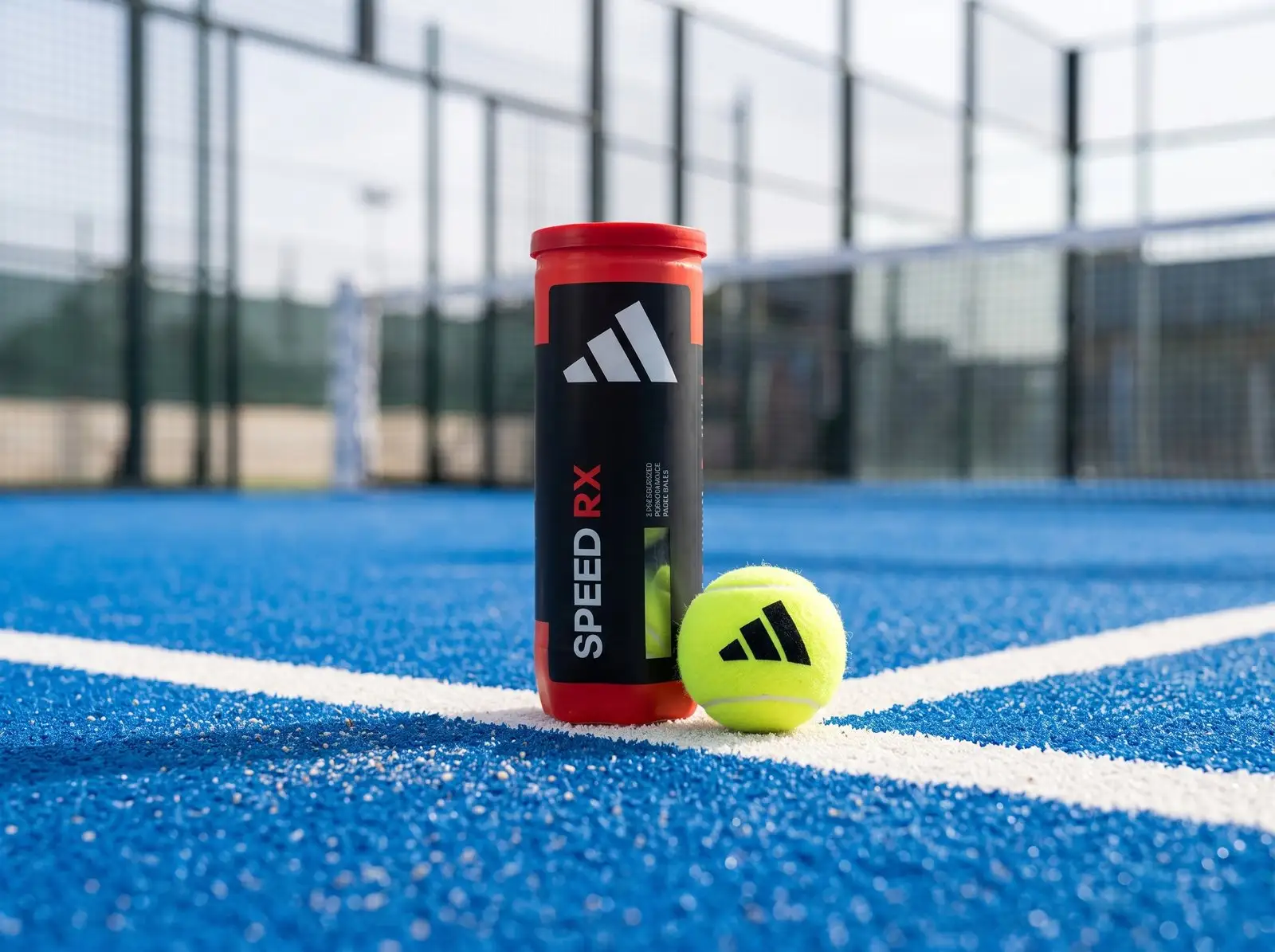
For cold weather and slow courts. The ball in the photo, the adidas Speed RX, which PadelProShop sells as the Adidas RX, at €6.00. It’s a fast ball: the shop describes it as a blend of speed and bounce.
The court changes how the ball plays, and it also decides which shoes you need: our guide to choosing padel shoes explains which sole suits each surface.
Frequently asked questions
What are the best padel balls for winter?
Fast ones. Wilson, for example, designed its Speed ball for cold weather and slow courts. If the ball bounces low and slow in winter, that’s your cue to change.
What is a pressureless ball?
According to the FIP’s ball certification document, it’s a ball filled with a microcellular material that simulates the effect of internal pressure. The FIP treats it as a standard ball, just like pressurised ones.
How do I know if a ball is approved?
The FIP publishes a list of approved balls, with their expiry dates. Approved cans may carry the FIP logo.
Sources and topics
Sources (8)
- FIP: Rules of Padel, in force from 01/01/2026 (“The Ball” section) (accessed 26/10/2026)
- FIP: ball certification and list of approved balls, in Spanish (accessed 26/10/2026)
- Head: padel ball range, Head’s official website (accessed 20/10/2026)
- Wilson: Premier Padel and Premier Padel Speed balls, Wilson’s official website (accessed 20/10/2026)
- Premier Padel: Wilson named official ball of the tour (24/01/2024)
- PadelProShop (English store): Head One (checked 26/10/2026)
- PadelProShop (English store): Wilson Padel Premier Speed (checked 02/11/2026)
- PadelProShop (English store): Adidas RX (checked 26/10/2026)
More news


Weekly newsletter
The week in padel, without the filler
The padel news that mattered this week, picked for a five-minute email. Free. For now the newsletter is written in Spanish.
No spam. Unsubscribe whenever you like. Privacy.